More in Thai (อีก ขึ้น กว่า ยิ่ง)

This article shows you four different words which means the word more in Thai. The word more in English is flexible

This article shows you four different words which means the word more in Thai. The word more in English is flexible

There are three words which means to lose in Thai including the word หาย (hǎay), แพ้ (phǽæ) and เสีย (sǐa) can be used to mean to lose.

This lesson you are going to learn how to say have to in Thai with the word ต้อง (tɔ̂ŋ).
[section] [row] [col span__sm=”12″ span__md=”4″] [ux_image id=”6405″ image_size=”original” width__md=”100″] [/col] [col span__sm=”12″] [ux_text font_size=”1.3″] The Story of Palm Part 1 Childhood has two editions; the transliteration version and the Thai script version. The transliteration version aims to provide a fun learning material for the learners who are learning to speak Thai, and are not yet … Read more
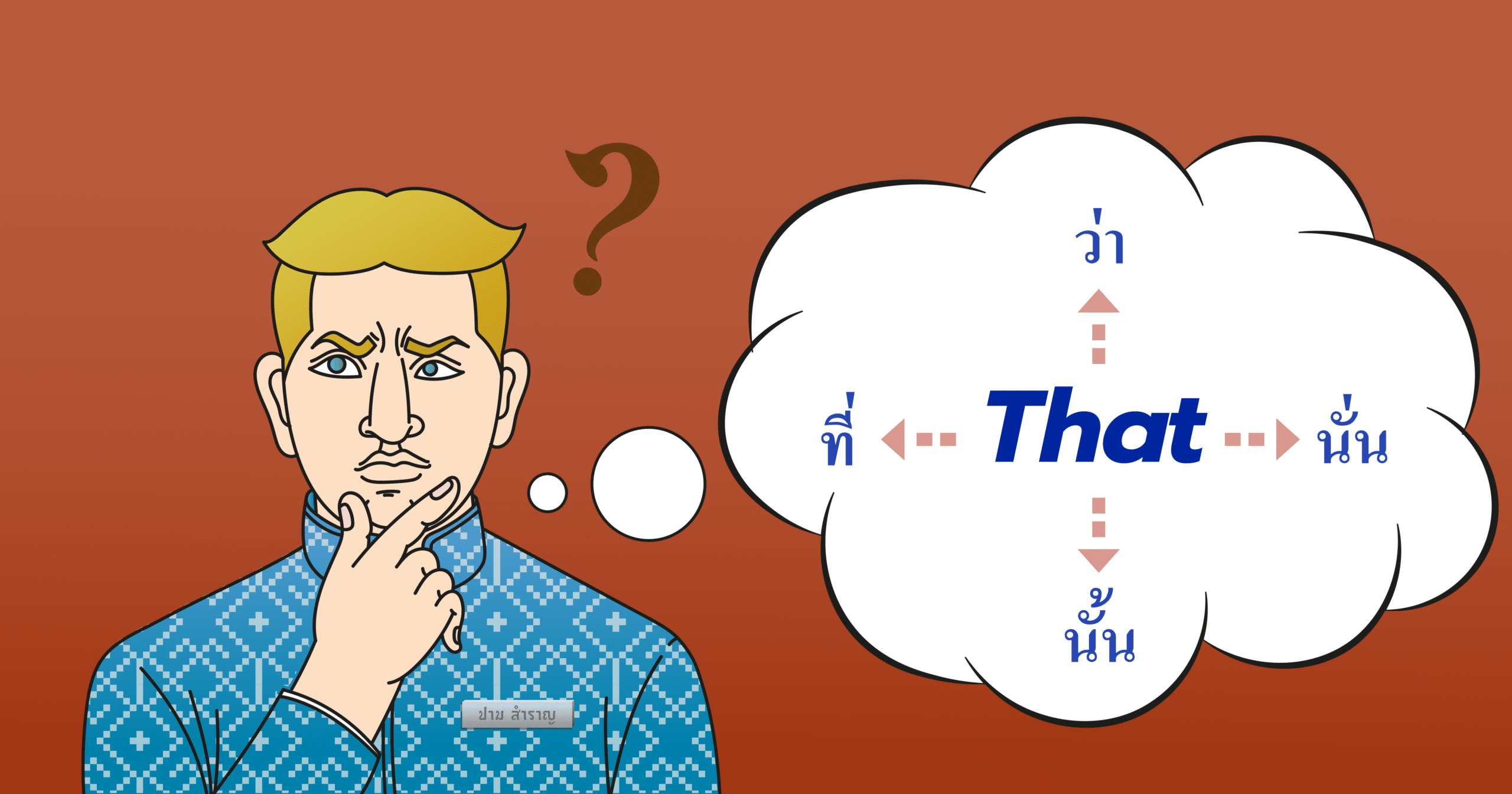
The word ที่ (thîi) is commonly known as the word at in English. However, it has more uses that that.

The word หลัง (lǎŋ) is used as the word after in Thai. There are several ways to make a use of this word.

The word โทรศัพท์ (thoorasàp) does not only mean a telephone, it is also used as a verb to phone in Thai. Let’s learn how to use this word correctly.

Two different words to say return in Thai are กลับ (klàp) and คืน (khɨɨn). Let’s see how they are used in different contexts. กลับ (klàp) กลับ (klàp) is used when you are back or return to a place where you were before. This word is equivalent to the word back in the phrasal verbs come … Read more

Let’s learn these two most common words to say ask in Thai including ถาม (thǎam) and ขอ (khɔ̌ɔ), and see how to use them in a proper situation.

ไม่เคย (mây khəəy) is known as the word never in Thai. However, this word cannot be used exactly the same way you use the word never in the English language.